
*This article is for informational purposes only and does not replace medical assistance
So you’re scared of Wi-Fi now, huh? Even I was scared when I heard that Wi-Fi causes cancer in some random YouTube video. Come on, who wouldn’t be scared after hearing that? But before you panic, let’s look at what the science actually says. We’ll learn about all this in detail in this article.
Radiation by Wi-Fi
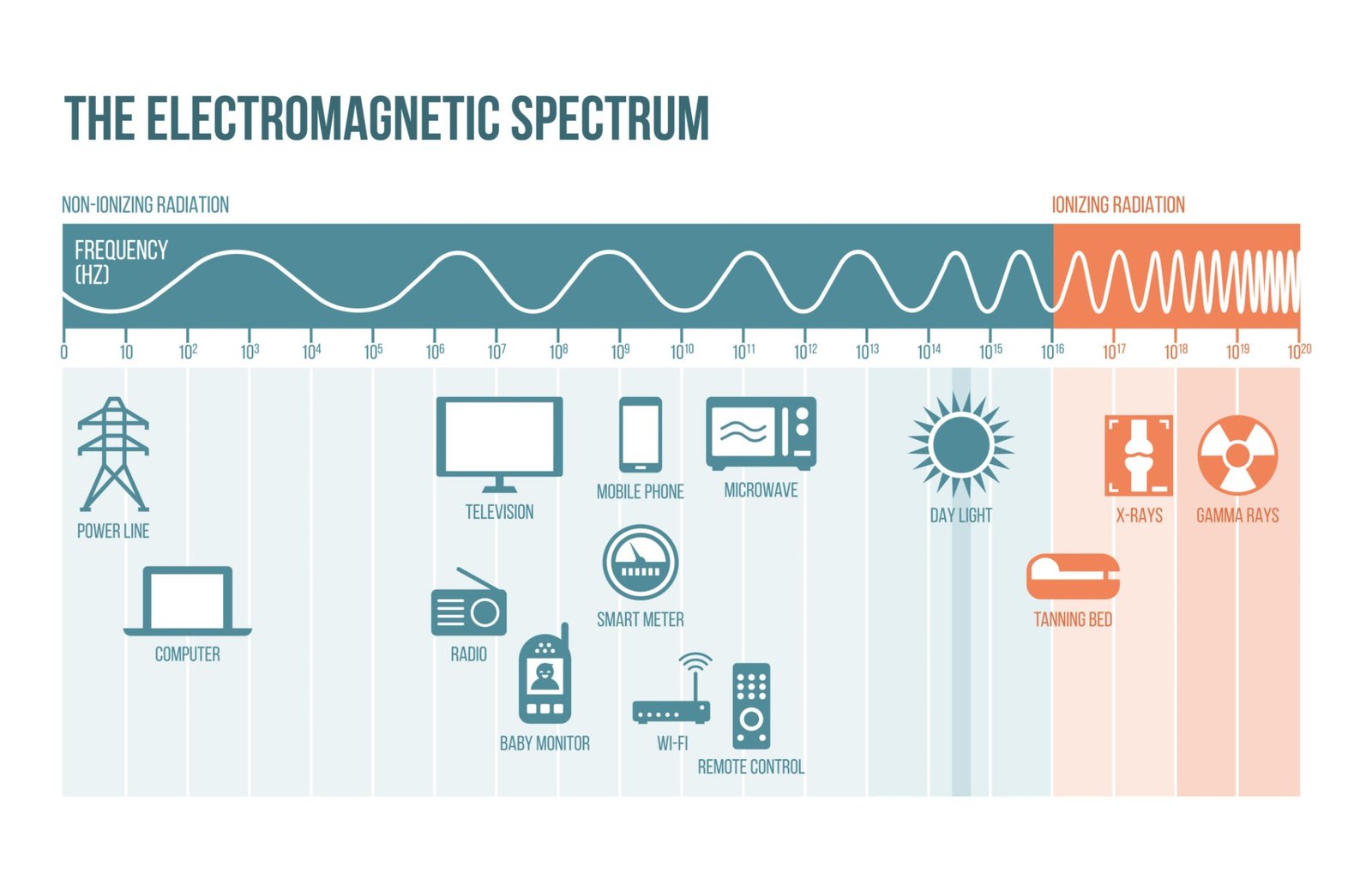
Don’t get scared right away. The word radiation doesn’t automatically mean something is dangerous. Radiation simply refers to energy travelling through space, and it can be divided into different types. Wi-Fi uses a form of low-energy, non-ionizing radio frequency (RF) radiation.
Radiation can be categorised into Ionizing and Non-Ionizing based mainly on the amount of energy carried by the radiation.
- Ionizing Radiation: At the high-energy end of the electromagnetic spectrum, you find X-rays and gamma rays, as well as some ultraviolet (UV) radiation. These forms of radiation carry enough energy to remove electrons from atoms and can directly damage DNA and cells. This is why excessive exposure to certain types of UV radiation can increase the risk of skin cancer and why X-rays are carefully controlled.
- Non-Ionizing Radiation: At the lower-energy end of the spectrum, you find visible light, infrared, microwaves, and radio waves. Wi-Fi uses radio frequency (RF) waves in this non-ionizing category. These waves do not have enough energy per photon to directly break chemical bonds or damage DNA in the way ionizing radiation can. At sufficiently high intensities, however, RF radiation can heat tissue, which is why exposure limits exist.
Source – WHO
The Thermal Effect
While non-ionizing radiation does not have enough photon energy to directly damage DNA like ionizing radiation does, sufficiently strong radio frequency (RF) exposure can cause heating. This is the basic principle behind microwave ovens: they use radio-frequency electromagnetic energy to heat food. The important point is that microwave ovens operate at much higher power levels than Wi-Fi equipment.
Wi-Fi can use frequencies that overlap with some microwave ovens, especially around the 2.4 GHz band. This often makes people wonder: If a microwave uses 2.4 GHz, doesn’t that mean Wi-Fi can cook us too? No. The frequency is only one part of the equation. The amount of power being transmitted and how close you are to the source are also important.
- Power matters: A household microwave oven can deliver hundreds or even around a thousand watts of microwave power into a small enclosed space. A typical Wi-Fi router transmits at a much lower power level, generally around a fraction of a watt to roughly a watt depending on the equipment and regulatory limits. The wattage of a router refers to its transmitted radio power, not the total electricity it consumes.
- Distance matters: The further you are from a source, the lower the intensity of the signal generally becomes. This is one reason that holding a transmitting device directly against your body can produce greater local exposure than being several metres away from a router.
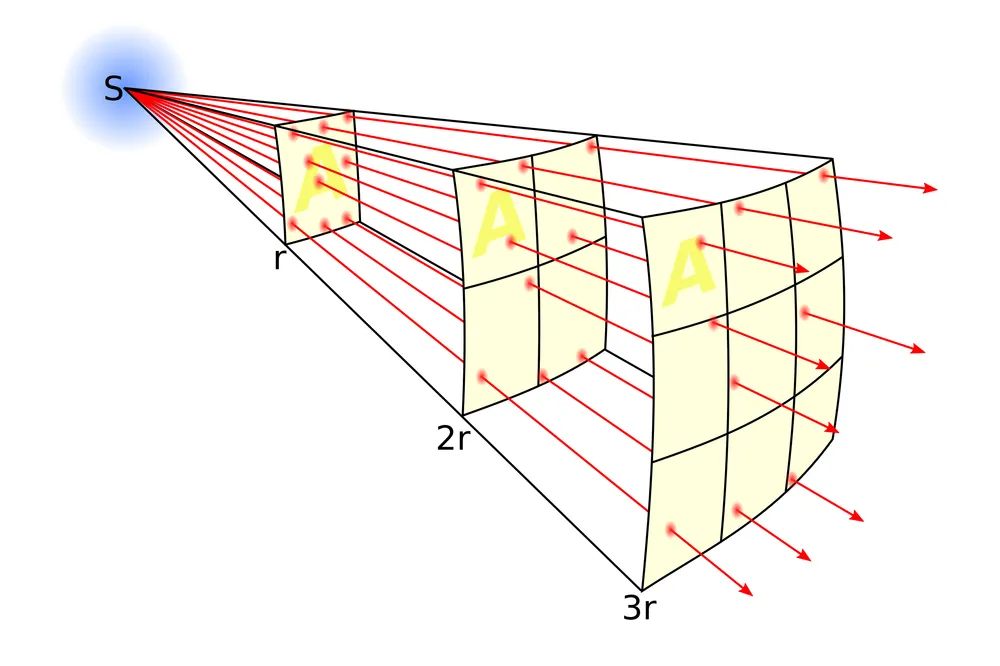
The inverse-square law describes how the intensity of radiation from an ideal point source decreases as you move farther away from it. If you double the distance, the intensity becomes roughly one-quarter (25%) as strong. In simpler words, the intensity decreases rapidly as distance increases.
This is one reason why distance from a wireless transmitter matters when considering exposure. However, real Wi-Fi environments are more complicated than a single point source because signals can reflect off walls and objects, and routers and phones do not always transmit at constant power.
What global experts say
Research into radio-frequency exposure and health is ongoing, but the evidence available so far has not established that typical low-level exposure from Wi-Fi causes cancer or other serious health problems. Here are some conclusions from major scientific and public-health organisations:
- World Health Organization (WHO): WHO states that, based on current scientific evidence, there is no convincing evidence that the weak RF signals from wireless networks and mobile phones cause adverse health effects at exposure levels below international guidelines. Source
- International Commission on Non-Ionizing Radiation Protection (ICNIRP): ICNIRP develops science-based exposure guidelines for electromagnetic fields. Its guidelines are designed to protect people from established effects of RF exposure, particularly excessive tissue heating. Typical environmental exposure from wireless technologies is generally well below these limits. Source
- The 2026 NIPH Umbrella Review: In January 2026, the Norwegian Institute of Public Health (NIPH) published an umbrella review examining systematic reviews of research into radio-frequency exposure and health. The review did not find evidence that exposure from mobile phones or wireless networks causes cancer, tumors, or sleep disorders. As with all scientific reviews, the conclusions are based on the evidence available at the time and research continues. Source
Biggest Wi-Fi Myths
Despite the research, several myths about Wi-Fi continue to circulate online. Here are some of the most common ones:
Myth: Wi-Fi causes cancer
Fact: Wi-Fi uses low-power, non-ionizing RF radiation. Unlike ionizing radiation such as X-rays, it does not carry enough energy per photon to directly damage DNA. Current scientific evidence has not established that typical Wi-Fi exposure causes cancer. Read more from WHO
Myth: Wi-Fi disrupts sleep and brain function
Fact: Research into RF exposure and sleep has not established that typical Wi-Fi exposure causes poor sleep or harmful changes in brain function. Some controlled studies have observed small changes in certain measures of brain activity under specific RF exposure conditions, but these findings have not been shown to translate into meaningful health problems or poorer sleep. If your phone keeps you awake at night, the screen, notifications, or simply using the device before bed are much more obvious factors to consider than the Wi-Fi signal itself.
Myth: Wi-Fi is dangerous during pregnancy
Fact: Current evidence has not established that the low-level RF exposure produced by Wi-Fi networks poses a health risk to pregnancy or fetal development when exposure remains within established safety limits. If you have a specific medical concern during pregnancy, it is still best to discuss it with a qualified healthcare professional.
Still worried?
If you are still concerned about Wi-Fi exposure, there are simple steps you can take. These aren’t necessary for most people, but they may give you peace of mind.
- Increase distance: The farther you are from a Wi-Fi router, the lower your exposure generally becomes. More distance = Less exposure.
- Turn it off at night: If you don’t need your Wi-Fi while sleeping, you can turn off the router at night. This isn’t considered necessary for health reasons, but it may give you peace of mind and can save a small amount of electricity.
- Use cables: If you prefer a wired connection, you can use Ethernet cables. They don’t transmit data using Wi-Fi radio waves and can also provide a stable connection.
Conclusion
As we continue to build smarter homes and faster, more complex networks, it is perfectly rational to question the invisible technologies surrounding us. However, the evidence available today does not support the idea that normal Wi-Fi use is a significant health hazard. Wi-Fi routers use low-power, non-ionizing RF signals, and typical exposures are generally far below established safety limits.
Science is always open to new evidence, so research into wireless technologies and health continues. But based on the evidence we have today, there is no good reason for most people to be afraid of their Wi-Fi router.